
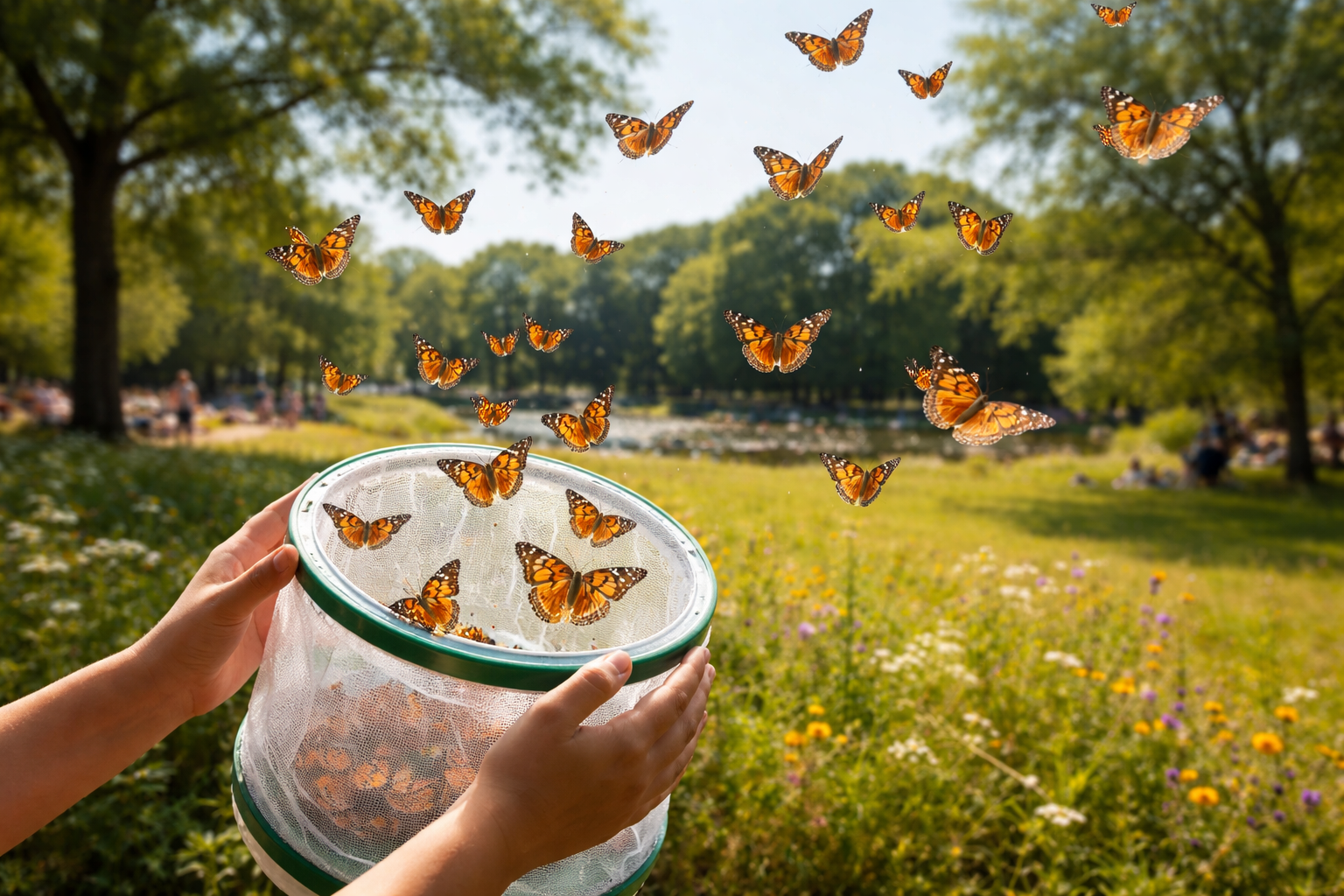
A butterfly release is one of those rare moments that feels both personal and bigger than you, beautiful, symbolic, and alive. But once the last wingbeat disappears over the trees, a natural question follows:
What happens to the butterflies after they’re released?
The answer depends on species, season, and local habitat, but the short version is this: they do what butterflies have always done, seek warmth, nectar, shelter, and (if conditions are right) a place to lay the next generation. And you can help make that journey more successful.
First Things First: The Release Sets the Tone for Survival
A strong post-release story starts with a responsible release. Butterflies are cold-blooded, which means temperature and timing matter. Releasing in the right conditions helps them take flight quickly, avoid predators, and start feeding.
The best guidance is simple and practical: warmer weather is better, rain is not ideal, and releases are best planned for the right time of day.
Quick expectation-setter:
- Some will fly up immediately.
- Some may land nearby to bask in the sun.
- Some may wait until they’re warm enough to take off, especially if it’s cool, cloudy, or late in the day.
How Long Do Released Butterflies Live?
Butterfly lifespans vary widely by species and season.
- Many adult butterflies live only a couple of weeks, especially non-migratory summer generations, because adulthood is focused on feeding and reproduction.
- Painted Ladies typically live a short adult life, around less than 2 weeks in many conditions, spending that time feeding on nectar and reproducing.
- Some butterflies live longer when they’re part of a migratory or overwintering generation. Monarchs are a famous example: some generations live just weeks, while the migratory generation can live many months.
This is part of what makes releases so meaningful: you’re witnessing a vivid chapter in a very real, very wild life cycle.
How Far Might They Travel?
Some released butterflies may remain near the release area if nectar and shelter are nearby. Others may drift beyond your neighborhood within hours or days, especially if conditions are breezy or resources are sparse.
Monarchs: built for distance
Migratory monarchs can travel up to ~3,000 miles, moving day by day along their route.
Painted Ladies: travelers, too
Painted Ladies are famous for periodic large-scale movements; for example, the University of Wisconsin Extension notes they commonly move north from northern Mexico and the U.S. Southwest and can show up in big migration years.
What this means for your release: you may see butterflies in the area for a little while, but you should assume they’ll disperse in search of nectar, mates, and suitable habitat.
Your release is a send-off, not a “set-down.”
The best way to increase the chances they linger nearby is to make the area worth staying in.
How to “monitor” them without stressing them
If you want to keep the story going post-event, think observe, don’t handle:
- Watch where they land first (nearby flowers, shrubs, tree limbs, sunny walls).
- Look for nectar behavior: uncoiling the proboscis and sipping at blooms.
- Take photos, not captures (a quick phone photo can become usable data for research).
And remember: releasing at the right time of day improves the odds they’ll fly and settle safely. Consider releasing about an hour before sunset for the best survival conditions.
The Best Way to Help: Plant What Butterflies Actually Need
Butterflies need two things, and they’re different:
1) Nectar plants (for adult butterflies)
Aim for continuous blooms, something flowering in spring, summer, and fall. Painted Ladies are known to feed on garden favorites like zinnias, coneflowers, asters, blazing star, and more.
2) Host plants (for caterpillars)
This is where real population support comes into play.
- Monarch caterpillars require milkweed. U.S. Fish & Wildlife emphasizes that monarch habitat needs milkweed plus nectar plants, tailored to your region’s native plant communities.
- The National Wildlife Federation recommends choosing milkweed native to your region.
If you want region-specific plant ideas (without guessing), these guides are gold:
- Xerces Society native plant lists (by region)
- Pollinator.org ecoregional planting guides
One more big help: keep your space as pesticide-free as possible. Pollinator-friendly habitat matters most when it’s actually safe to live in.
Join Citizen Science: Turn Your Release into Real Conservation Data
If you love the idea that your moment could contribute to research, this is the easiest (and surprisingly fun) next step:
- iNaturalist: Log butterfly sightings with photos; the platform shares biodiversity data with researchers and repositories.
- Journey North: Report monarch eggs, larvae, adults, and fall roosts—great for tracking seasonal movement.
- Monarch Watch tagging (seasonal): Volunteers tag monarchs to help scientists study migration and survival.
- NABA Butterfly Counts: Join a local count day and contribute to long-running population monitoring.
A simple “Butterfly Sighting Log”
If you like journaling (or want something fun for kids/guests), track:
- Date/time
- Location (park/garden/cross street, not someone’s private address)
- Weather (sunny/overcast/windy)
- Flower or plant visited
- Photo (if possible)
This becomes even more powerful when you turn sightings into citizen science.
“How else can I help?” A few meaningful ideas
If you loved your release and want to keep that feeling going:
- Create a pollinator patch (even a few pots on a balcony can help)
- Share a plant list with guests as a post-event thank you
- Sponsor or support conservation organizations doing habitat work
- Teach kids to observe responsibly (photos + gentle watching)
This is how a single event becomes something ongoing: a memory that turns into habitat.
Keep the magic going with Clearwater Butterfly
If you’re planning another meaningful moment, wedding, memorial, celebration, or a simple “just because” release, explore Clearwater Butterfly’s release resources and kits. And if you’re not sure what’s best for your group, our Individual vs. Mass Release blog can help you choose a format that fits your moment.